
Definition of “ITAD” and Why Every Business Need It?
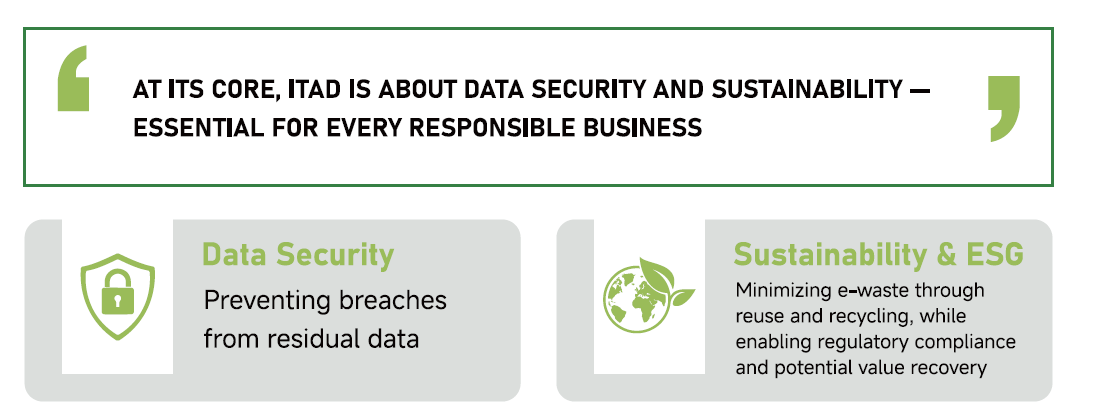
In a world where data breaches cost businesses millions, is your company still handling IT asset disposal in-house? Let's break down ITAD and why it's essential.
IT Asset Disposition (ITAD) is the comprehensive, secure, and compliant process of managing the end-of-life of IT equipment — from decommissioning to final disposal. It covers servers, laptops, storage devices, networking gear, and peripherals.
Why do enterprises need ITAD?
Data Security: Destroy sensitive information to prevent breaches.
Compliance: Meet laws like PDPO (Personal Data Privacy Ordinance), GDPR, HIPAA, or local e-waste regulations.
Sustainability: Properly recycle electronics to reduce environmental impact.
Efficiency: For large-scale ops, internal IT teams waste time; partner with 3rd-party experts for handling and recycling.
Who needs it? Industries like data centers, banking, internet services, general enterprises, universities, and governments—all handling high volumes of devices (laptops, servers, printers).
Data Centers / Internet Companies / Telecom - Manage vast amounts of user data, IP, and infrastructure logs — high risk of large-scale exposure.
Government Institutions (R&D, Public Data): Handle classified, citizen, or research data with strict national security and privacy obligations.
Hospitals & Healthcare Providers: Process highly sensitive patient/client medical records protected under health data laws.
Retail Companies: Store extensive customer transaction, payment, and personal profile data.
While small firms might manage internally, scaling businesses benefit from professional vendors for end-to-end service.
If your IT team is overwhelmed with asset write-offs, DM us for a free consultation on tailoring ITAD to your needs. What's your biggest disposal challenge? #ITAD #DataProtection
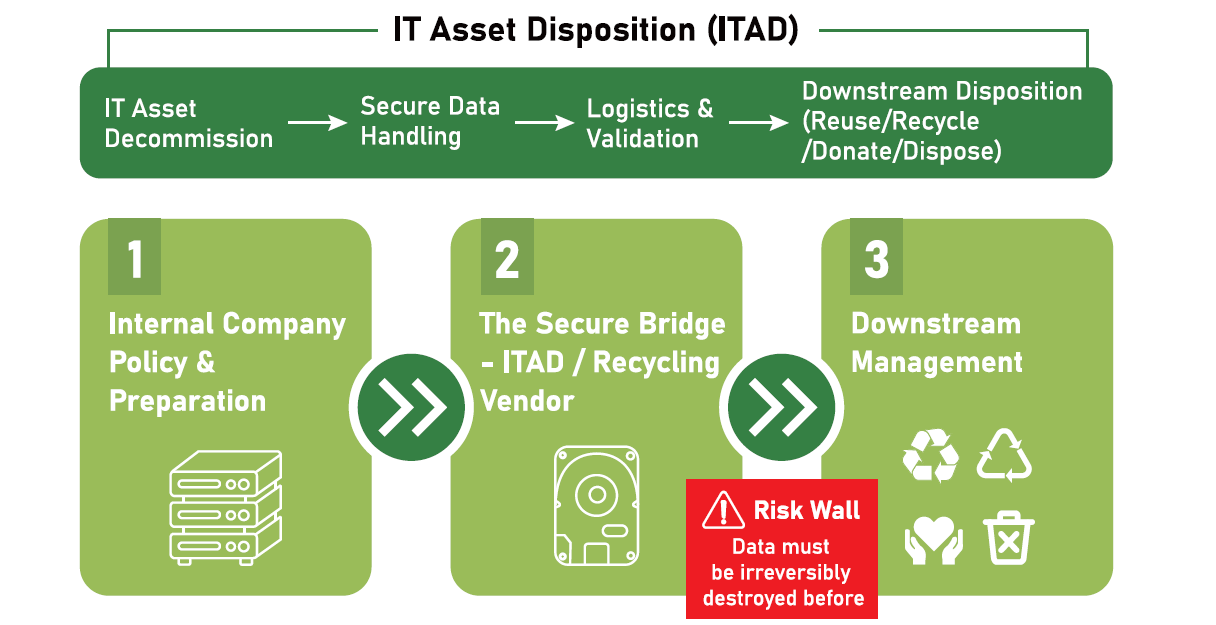
ITAD at a glance