Findings from the 2026 Sustainability Reports: how Google, AWS, Microsoft handle IT hardware circularity in Data Center
Data center circularity can be read in many different layers — Most headlines stop at construction, power and water. Let's look into the IT hardware and end-of-life: how Google, Microsoft, and AWS reuse, recover, and manage decommissioned servers, components, and drives.
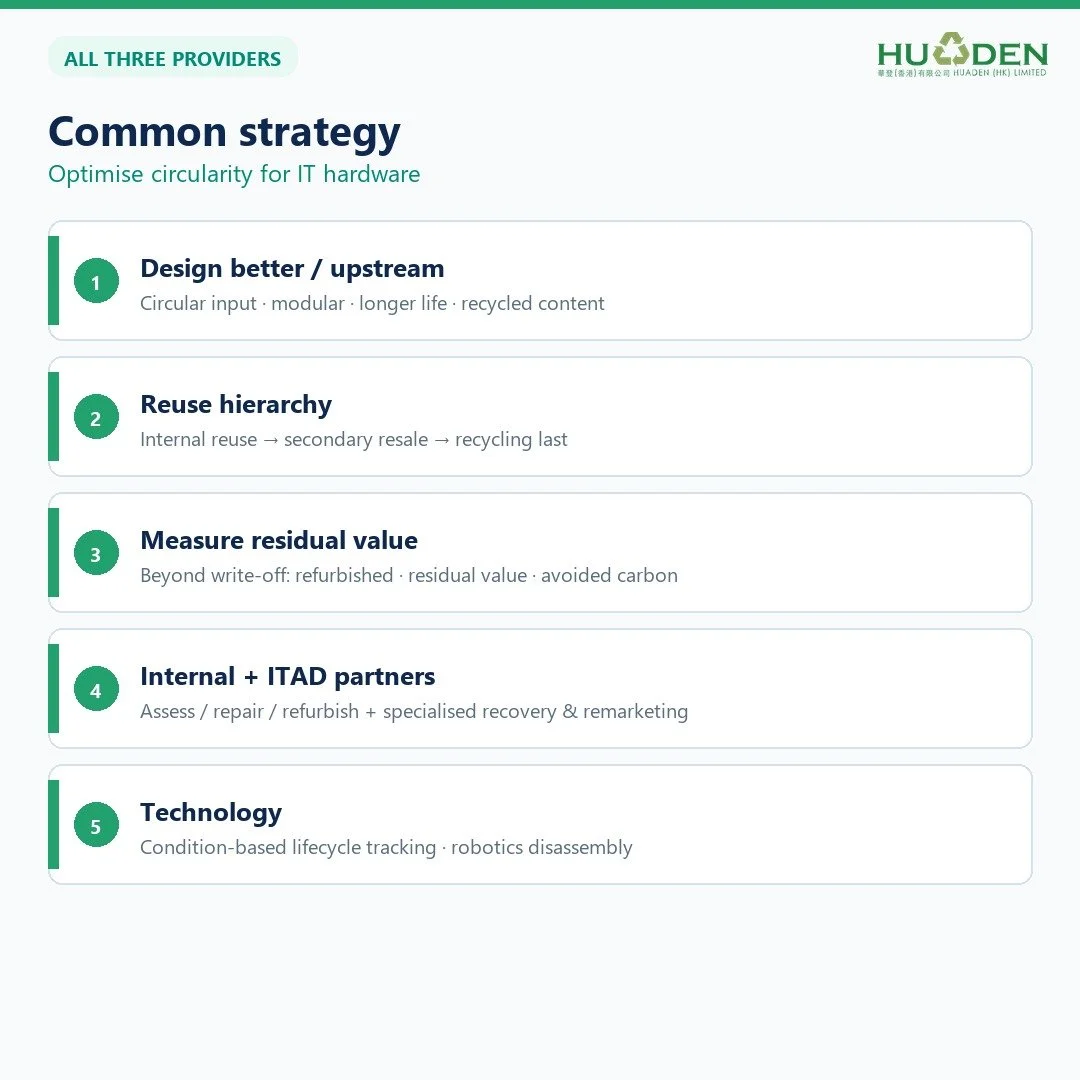
Common strategy across the three:
• Design better upstream — circular material input, modular design, longer life, higher recycled content
• Reuse hierarchy — internal reuse → secondary-market resale → recycling last
• Expand what finance & procurement measure — not only bought / stored / written off, but also looking on Refurbished Components, Residual Value, and Avoided Carbon
• Internal process + specialist partners — systematic assess / repair / refurbish, plus ITAD & recycling partners to lift residual value and recovery rates
• Technology — Condition-based lifecycle data tracking, robotics to disassemble servers for higher recovery
1. Google —
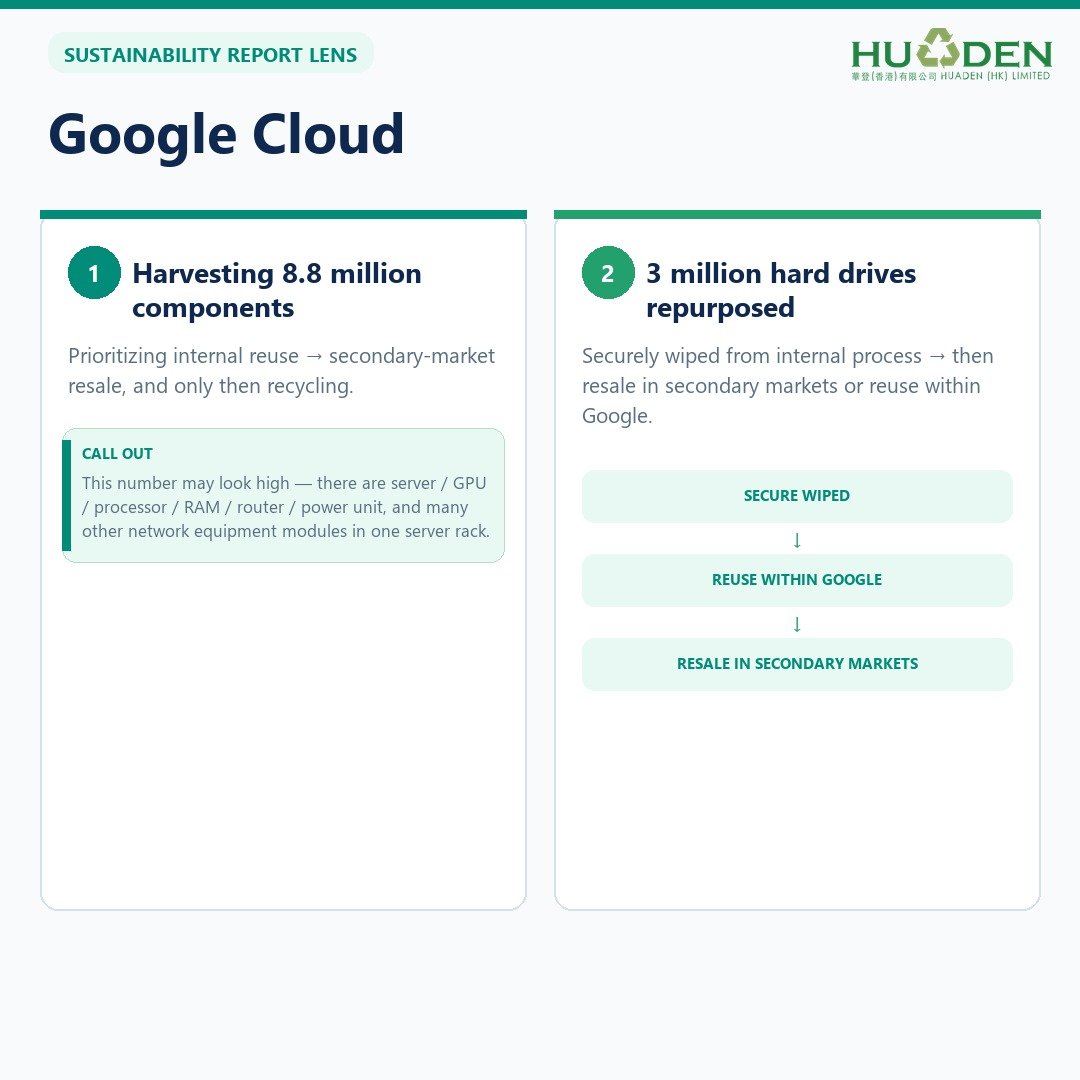
Harvest at scale: 8.8M+ components from decommissioned hardware (can include servers, GPU, CPU, RAM, power, network modules, and more);
3 Million hard drives repurposed via secure wipe for internal reuse or secondary markets. Order of play: internal reuse → resale → recycle.
Full report → https://lnkd.in/gEvhN8iV
2. AWS —
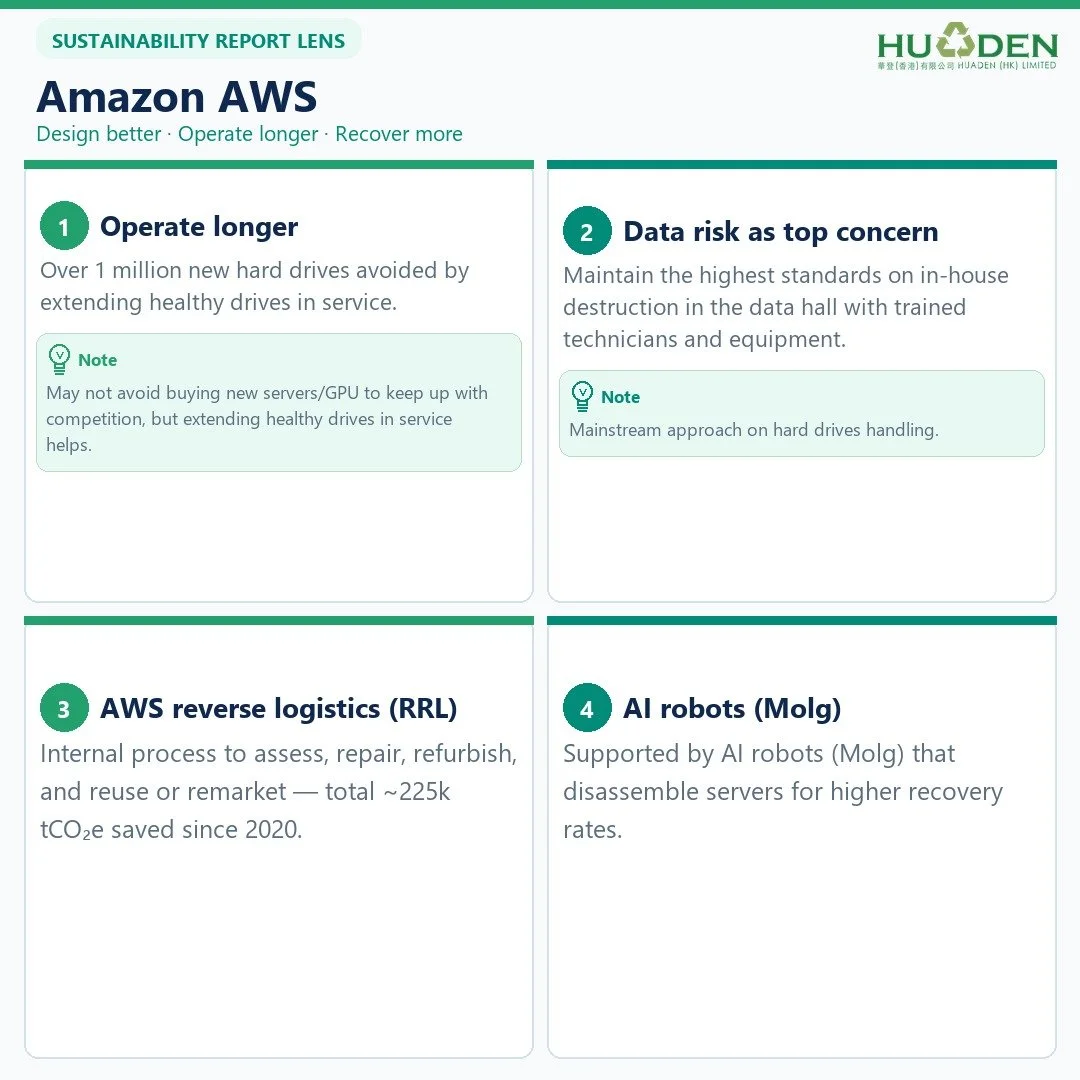
Operate longer: 1M+ HDDs avoided since 2023 by keeping healthy drives in service (life extension on drives, not always whole servers/GPUs); Data risk remains #1 — many operators still prefer high-standard in-hall destruction; Recover more: AWS Reverse Logistics RRL (assess → repair → refurbish → reuse/remarket); ~225k tCO₂e saved since 2020; Adopt AI robots (**Molg**) for non-destructive disassembly.
Full report → https://lnkd.in/gTMY6FGS
3. Microsoft —
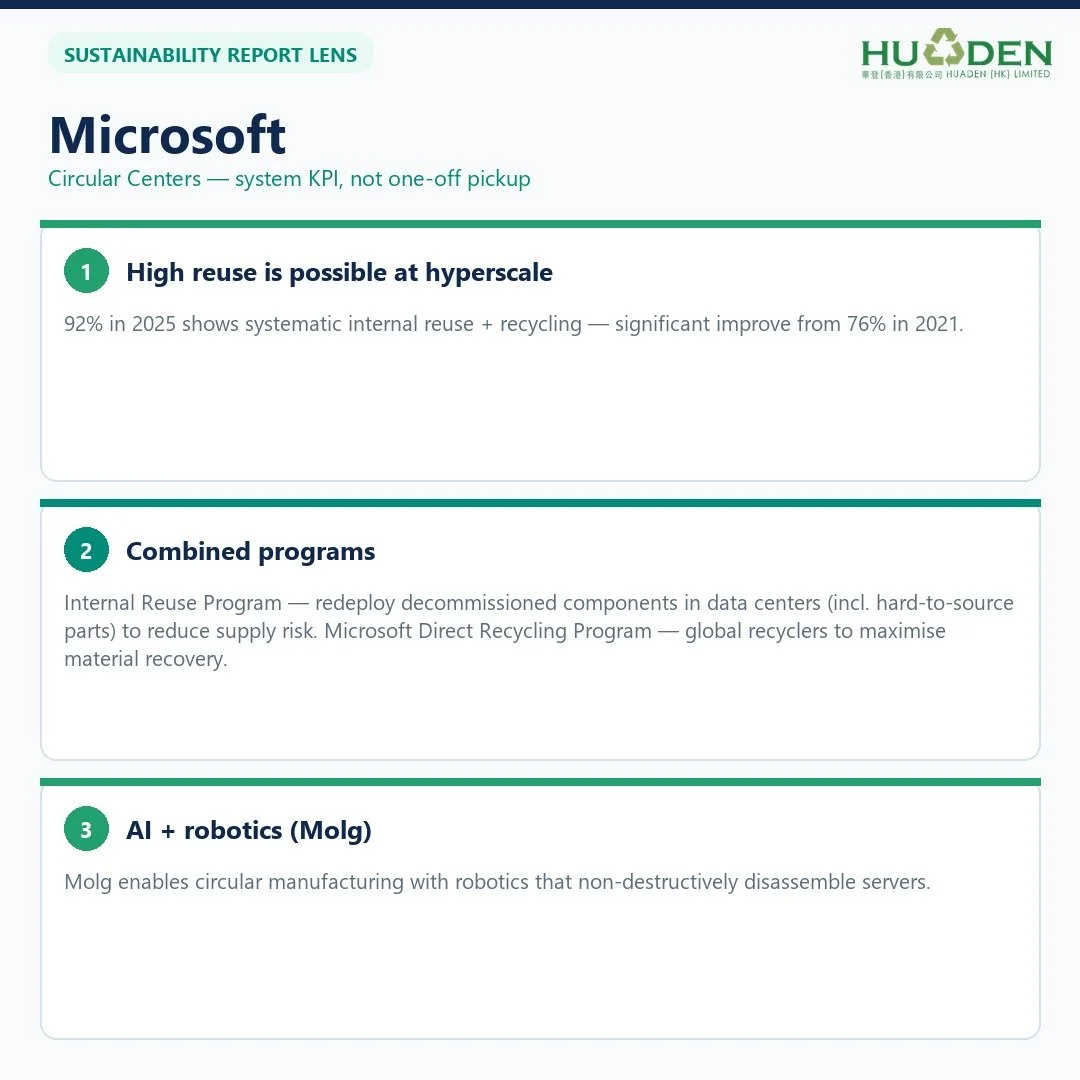
92% reuse + recycling of decommissioned servers/components in 2025 (up from 76% in 2021).
Dual programs: Internal Reuse (recertify/redeploy spares, including hard-to-source parts) + Direct Recycling with global specialists. Same robotics direction: Molg for higher component recovery.
Full report → https://lnkd.in/gsZcZsRM
For telecom, internet, and enterprise with local operations: evaluate your End-of-life vendors on secure sanitisation, chain of custody, component harvest, remarketing, and recovery metrics — not pickup price alone.
At Huaden, we help close the gap between data security and circular recovery with audit-ready documentation, and responsible disposition.